 Sort ingredients
 rsnake
 QR Code
 Listen
 Pdf
Pdf
Preheat oven to 400° F.
Spread pork bones out on a heavy-duty rimmed baking sheet and roast for 30 minutes.
After 30 minutes, carefully flip bones with a metal spatula and tongs and add carrots and onions to pan, piling vegetables on top of the bones. Roast for 30 more minutes, until vegetables begin to char around edges and bones begin to caramelize.
Transfer bones and vegetables to a large stockpot. Add 14 cups water, reserving the last ½ cup to deglaze the roasting sheet, using a metal spatula to scrape up all the browned bits before adding mixture to stockpot. Water should be covering bones by about an inch.
In a small bowl, whisk tamarind paste, tomato paste, and 2 tablespoons water from the stockpot. Whisk this mixture into the stockpot.
Heat stock over medium-high heat until nearly boiling, and then reduce to a slow simmer.
Continue simmering (uncovered) for 2 hours.
After 2 hours, using a sieve, strain out vegetables, pressing down on solids so liquids go back into stockpot. One at a time, carefully take out bones and put them on a plate near your stockpot. Using small tongs and a fork (or two forks) remove the meat. Transfer meat to a container with a tight fitting lid and refrigerate. Return bones, including cartilage and fat, and any liquid that may have accumulated on the plate, to stockpot. Continue simmering for 1 hour.
At this point, you can allow mixture to cool slightly before refrigerating overnight.
The next day, remove congealed fat layer from surface of stock before simmering for a final hour, adding the smoked ham hock, whole cilantro plants and scallions. Strain out hock and aromatics with a sieve, pressing down on solids to allow liquids back into stock.
Alternatively, you can make the stock in one day by adding the smoked hock and aromatics after three hours of simmering (skipping the extra overnight in the fridge), and continue cooking for the final hour.
Take stock out of refrigerator and remove congealed fat layer from the surface of soup.
Heat stock over medium-high heat until nearly boiling, and then reduce to a slow simmer.
If you have them, use a suribachi and surikogi to grind katsuo furikake into a paste. If you do not, a regular mortar and pestle will also work. Add ½ t sesame oil midway through grinding to help mixture come together.
When almost all of the sesame seeds are mashed, add in 1 T of gojuchang. Whisk this into the stock and allow soup to simmer for 20 minutes.
Turn off heat.
Place miso paste in a small bowl and whisk in enough hot stock (2-3 T) to liquefy the miso. Pour this into stock and stir to incorporate. Allow mixture to cool and refrigerate overnight.
Remove your soup from the refrigerator and slowly heat it up.
In another pot, cook rice vermicelli according to directions on the package, and then drain in a colander, rinsing with some cold water to stop the noodles from cooking.
In a skillet large enough to hold pork and cabbage, heat sesame oil over medium heat.
Add chopped pork and stir to heat through. Add cabbage and stir to take off raw edge. Turn off heat, stir in balsamic and a pinch of salt.
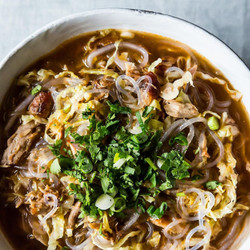
Portion rice noodles into soup bowls.
Top each bowl with pork and cabbage.
Ladle steaming broth over each bowl.
Generously add chopped green onions and cilantro to each bowl and serve immediately.