 Sort ingredients
 helen
helen QR Code
 Listen
 Pdf
Pdf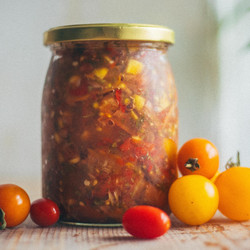
Crush the garlic, herbs and lemon zest in a pestle and mortar, then add 150g of tomato and a teaspoon of smoked paprika and crush the whole lot into a sauce. You can use a blender for this, but I opted for a pestle and mortar as the act of crushing is a similar mechanism to chewing and releases more flavour and aroma from every cell than the cutting motion of a blender. Blenders can also heat up when left for too long, which will harm the microbes.
Finely dice the remaining ingredients, reserving a tomato for larger diced pieces to provide a variety of textures, and mix them into the sauce. Add the salt and stir it in, then pack the whole lot into a freshly cleaned jar.
Cover the top of the relish with a round piece of grease-proof paper or food safe plastic wrap and secure the lid in place. This ferment is anaerobic, so requires sealing off from oxygen. This allows the lactic acid bacteria to convert the natural sugars of our relish ingredients into lactic acid, providing a pleasant sourness and extra security against spoilage. And unlike lacto tomatoes, it doesn’t have a tendency to turn alcoholic.
Leave somewhere out of direct sunlight between 18-25°C (65-77°F) for 4-5 days, opening the jar once or twice during this time to vent carbon dioxide. Every other day, flip the jar upside down to stop any part of the ferment resting at the surface for too long, where exposure to air could allow mould growth. But let me reassure you, if you forget for a day this won’t be a problem, as the salinity of the mixture and natural acidity of tomatoes will make spoilage much harder for unwanted microbes.
After 5 days, move the jar into a fridge. This ferment is designed to be lightly fermented and short lived, lasting just a month or so. Whilst you can let it ferment at room temperature for longer, I find the best flavours are expressed before this one turns ‘fully fermented funk-mode’. The uses for this recipe vary hugely, adding it as-is directly into soups, stews, and salads, as a topping for nachos, or dressing for a burger bun. You can also separate the solids from the brine using a fine mesh sieve and mix the fermented diced ingredients with a peppery olive oil to make a delicious dressing, reserving the brine for additional quick pickles.