 Sort ingredients
 lizandcliff
 QR Code
 Listen
 Pdf
Pdf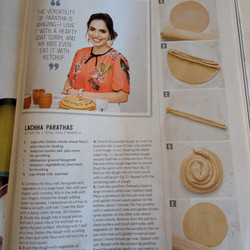
Combine the flour, salt, fenugreek and vegetable oil in a large bowl. Mix with your fingers until crumbly. Mix in the milk with your fingers. Knead the dough, adding water as needed, 1 tablespoon at a time, to make a smooth, soft ball. Cover the bowl with a damp cloth; let rest, 30 minutes.
Divide the dough into 6 equal pieces. Roll each piece into a 1 ½-inch ball on a lightly floured surface. Working with 1 ball at a time, flatten the dough with a rolling pin, then dust with flour and roll out into a thin 6-inch round.
Brush the dough with vegetable oil and sprinkle with more flour (fig. A). Fold the dough with your fingers to make ¾-inch pleats (fig. B).
Stretch the pleated dough as much as possible into a cone (it may only stretch 1 inch longer or so), keeping the pleats intact (fig. C). Spiral the pleated dough around itself like a cinnamon bun. Pinch the end of the dough together to secure. Dust the spiral with more flour (fig. D).
Roll out the dough into a 6-inch round with a rolling pin (fig. E). Repeat with the remaining balls of dough.
Cook the parathas: Preheat a tawa or large nonstick skillet over medium heat. Place a paratha in the hot pan and cook until golden brown spots appear on the bottom, about 1 minute. Flip the paratha with a spatula and cook until golden brown spots appear on the other side, about 1 more minute. Remove from the pan to a clean surface and brush both sides with vegetable oil. Return the paratha to the hot pan and cook until golden brown all over, about 1 more minute per side. Season with salt. Repeat with the remaining parathas.
Bend the parathas gently in your palms to expose the spiral layers and make them more defined.