 Sort ingredients
 helen
helen QR Code
 Listen
 Pdf
Pdf
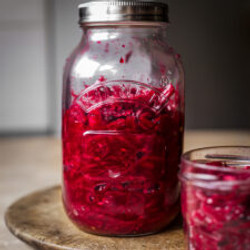
Before you start weigh the cabbage. You need 15-20g salt per kilo of produce, so if you are using significantly more or less than the recipe adjust accordingly. For our recipe we are using a total of 750g of produce, so we need approximately 15g salt.
You want to have very clean hands before handling the vegetables. Wash your hand in hot water- do not use soap and allow to air dry. Soap and hand towels can contaminate your hands with non-beneficial detergents and microbes, so hot water (that does not burn) is best.
Clean or sterilise all equipment as per your preference. Please read the blog post for more tips on this. You will need a very clean wooden or glass chopping board, a 3L fermentation jar or crock (like this one), very large glass or ceramic bowl, grater and large sharp knife or mandolin.
Peel off any outer cabbage leaves atet look withered or damaged. If you do not have fermentation weights set aside one large, good quality cabbage leave as we will use this later. Using your knife or mandolin very thinly chop or shave the cabbage into strips. I find it easiest to first quarter the cabbage and then chop along the long edge or the cabbage so as to create long strips of vegetable. Place a layer or the cabbage into your bowl and top with some salt. Repeat until the entire cabbage has been shredded, using the total of salt listed (1 Tbsp + 1 tsp).
Next, grate the beetroot and ginger and place on top of the cabbage. Cover the bowl firmly with a damp cloth (or plastic wrap if you prefer) and set aside for 30+ minutes. During this time the salt will draw moisture from the vegetables and begin to soften them. You can leave the bowl (covered) overnight in the fridge.
After the waiting period massage your vegetables until a fair amount of brine (liquid) has released from vegetables. This should take around 10 minutes, and really requires you to massage and squeeze firmly. Fresh vegetables will release more brine, however you may add an extra 1 tsp of salt if needed. Aim to have around ½ of brine sitting in the bottom of your bowl before finishing this process. Add optional seeds and mix through.
Take 2 handfuls of the mixture and carefully place into the bottom of your vessel. Use your fist to press down and firmly pack the vegetables down. Repeat until all of the mixture is transferred, ensuring your use your fist to firmly pack down each layer- this is an important step, so ensure you do it. Finally, pour any remaining liquid into the vessel. At the stage a layer of brine/liquid should be sitting about the vegetables. Take your weights and place onto the vegetables, or if you do not have weight use the reserved cage leaf. During the ferment you want the shredded vegetables to sit below the brine, and using weights or a cabbage leaf helps this process.
Leave to ferment for 5-14 days. Please read the blogpost for mould safety info. During this time you will need to press down the weights/cabbage leaves at least daily, for the first few days. The process of fermentation will create bubbles, naturally pushing the vegetables above the brine. It is your job to observe this process and keep submerging the vegetables. The most important thing to remember here is to wash your hands before hand, as described in step 2.
Will depend on a) the ambient temperature and b) your personal preference. Taste the sauerkraut after 5 days. If you like the flavour after 5 days, transfer into very clean glass jars and refrigerate. If you want a stronger taste continue to ferment and taste every day or two.