 Sort ingredients
 josipa
 QR Code
 Listen
 Pdf
Pdf
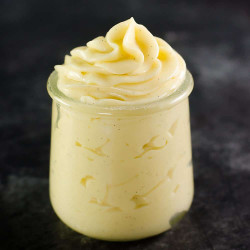
If using vanilla bean pods, split the bean and scrape the vanilla seeds / caviar out of the beans.
Add the bean and caviar with the milk into a saucepan. Heat the milk over medium high heat and bring it to a simmer, almost to a boil.
While heating the milk, place the sugar, egg yolks, cornstarch, and salt in a bowl. Whisk until you have a thick, smooth mix. (If you're using vanilla bean paste or extract, add it to the egg mix too). Place the bowl with the egg mix on a towel or napkin (to prevent the bowl from slipping while whisking in the next step), and set aside until the milk comes to a boil (almost to a boil).
As soon as the milk starts to steam or simmer, remove it from the heat. Slowly pour about a half of the hot milk in a thin stream into the egg mix, WHILE WHISKING CONSTANTLY to temper the egg mix. When the eggs have been tempered, add the egg mix back into the hot milk in the saucepan.
Heat the custard base over medium heat, while whisking vigorously until it starts to thicken. This should take about 1 - 2 minutes depending on the heat of your stove and size of your saucepan. Make sure to reach the corners of the saucepan so that the custard does not catch at the bottom of the pan.
While whisking, let the custard come to a boil (the custard will release bubbles). You may need to stop whisking from time to time for a few seconds to see if the custard is 'bubbling'. Look for big 'bloops' breaking the surface of the custard.
Lower the heat and cook for a further 1 - 2 minutes after you see the first bubbles break the surface, and make sure to whisk constantly.
Remove from the heat and add the butter. Whisk in the butter until it’s completely mixed in.
Pour the custard into a bowl and immediately cover the surface with plastic wrap, making sure the plastic wrap is touching the whole surface. This is to prevent a custard skin from forming on top. You can also choose to pass the custard through a sieve to remove any lumps.
Let the custard cool down to room temperature and then let it chill in the fridge for a few hours, until completely chilled.
The custard will 'set' after chilling. So it's important to whisk the pastry cream to make it smooth again before using.
Gelatin should be added to the pastry cream WHILE IT'S STILL HOT. While the milk is heating (for the pastry cream), place the water in a small bowl.
Sprinkle the gelatin over the water and use a toothpick or skewer (something slim) to mix the gelatin into the water so that there is no dry gelatin. Let this sit for at least 10 minutes to bloom (or until the pastry cream has cooked and thickened).
While the pastry cream is hot, add the bloomed gelatin along with the butter, and thoroughly whisk to make sure all the gelatin has dissolved in the hot pastry cream.
Cover the pastry cream with plastic wrap (same as above), and keep an eye on the pastry cream. Let it come to room temperature and then use the pastry cream as needed. If you chill the pastry cream it will harden as the gelatin sets.