 Sort ingredients
 cmwise49
 QR Code
 Listen
 Pdf
Pdf
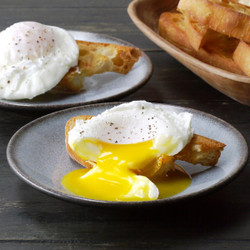
Fill a large saucepan with at least 3 inches of water and bring it to a boil. Then, reduce the temperature to a low simmer. The water temperature should be between 160 to 180°F. Add the vinegar and salt to the pan. Editor's Tip: If you don't have a thermometer, look for bubbles to gently spring up from the bottom of the pan. You want the water to be at a simmer, not a boil.
Carefully crack the eggs into individual small bowls, teacups or ramekins. Editor's Tip: Don’t crack the eggs directly into the water. The less disturbed the egg is as you drop it into the water, the better. We recommend using a teacup instead of a ramekin because teacups have flared edges, making it easy for the egg to slide out smoothly. Plus, the teacup’s handle is useful for tipping the egg into the simmering water.
Gently stir the simmering water in a clockwise motion. Hold the egg dish over the water as close as you comfortably can. Nice and easy, gently slip the egg into the water. Cook, uncovered, for three to five minutes or until the whites are completely set and opaque, and the yolks begin to thicken but are not hard. Editor’s Tip: Once you drop the egg into the water, give it a few seconds to gather itself. The swirling water will help roll the egg, collecting the stray egg whites to itself. Take care not to stir the water after that, or you may accidentally break the egg yolk.
When the eggs are finished cooking, use a slotted spoon to lift them out of the water. Place the spoon with the poached egg on top of a paper towel-lined plate to drain. Editor's Tip: Let the eggs drain on paper towels before putting them onto your Benedict or avocado toast. A damp, watery egg isn’t going to be very good! You can also use this time to remove any wispy tails with the edge of another spoon.