 Sort ingredients
 jadedmay
 QR Code
 Listen
 Pdf
Pdf
To make the Thai red curry paste, scatter the cumin and coriander seeds over the pan and toast for 2 minutes.
Peel the ginger by scraping off the skin with a spoon and roughly chop.
Peel and roughly chop the shallots.
Peel the garlic.
Trim and roughly chop the lemongrass.
Rip the stems from the chillies, removing the seeds if you prefer a milder sauce.
Put the toasted seeds into the liquidiser along with the ginger, shallots, garlic and lemongrass.
Add the fresh red chillies, bird’s eye chilli, if using, peppercorns, roasted red pepper, tomato purée and the lime leaves.
Squeeze in the lime juice, catching any pips in your other hand.
Add the 10g fresh coriander, salt and a splash of water, then whizz until really smooth with no bits, adding up to 50ml of water to loosen it if necessary.
Spoon 100g of the paste into a bowl and set the rest aside to use another time (freeze it in batches of 100g).
Prepare the vegetables by cutting the red and green peppers in half and cutting out the stems and seeds, then cut into 2cm chunks.
Rip the stem from the red chilli, removing the seeds if you prefer a milder flavour, and cut into slices.
Slice the mushrooms and halve the baby corn.
Put the pan back on a high heat and add the oil.
When it’s hot, add the 100g curry paste and fry for 2 minutes, until the paste deepens in colour and smells amazing.
Pour in the coconut milk and vegetable stock and stir well to mix everything together.
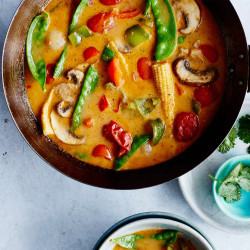
Add the sugar, agave syrup, soy sauce, peppers, chilli, mushroom, baby corn, tomatoes and mangetout.
Drain the lychees, if using and add them to the pan.
Bring to the boil and simmer for 7–10 minutes, until the vegetables are cooked through.
Taste and adjust the seasoning, adding salt, sugar or agave syrup as required.
Spoon the curry into bowls, garnish with a handful of coriander leaves and serve alongside white rice.