 Sort ingredients
 datumarkin
 QR Code
 Listen
 Pdf
Pdf
Adjust oven rack to middle position and preheat oven to 425ºF (220ºC). Set a 9-inch cake pan onto oven rack to preheat.
In a large bowl, whisk together all-purpose flour, cake flour, baking powder, sugar, and salt. Set aside.
Thinly slice 1 tablespoon of unsalted butter and set aside. On the large holes of a box grater, grate remaining butter onto a cutting board or piece of parchment. Add grated butter to dry ingredients and toss to evenly coat. Using your fingers, rub butter in until mixture is crumbly with no large chunks of butter. The mixture should hold together when squeezed, a sign that the flour is properly hydrated.
Make a well in the center of the dry mixture, then pour in the buttermilk. Using a fork or flexible spatula, mix until a shaggy, cohesive dough forms. Use your hands to gently fold the dough over itself a few times, mixing until dough is sticky and no dry bits remain.
Once oven is preheated, remove pan from oven and set onto a trivet or heat-proof surface. Add remaining 1 tablespoon butter to pan; using pot holders or oven mitts, swirl to evenly coat pan until butter has completely melted. (If butter does not melt fully, place pan back in the oven for 2 to 3 minutes).
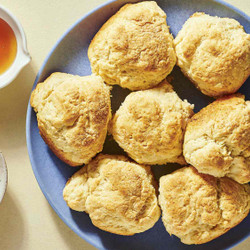
Divide dough into 7 equal portions, about 120g or 4 ½ ounces each, and shape each portion into a rough ball. Arrange 6 balls of dough around the edge of the pan and place 1 in the middle; they should just be touching.
Bake the biscuits until they spring back when touched, are golden brown on top, and register 190ºF (88ºC) when an instant read thermometer is inserted, about 35 minutes.
Let the biscuits cool in pan for 10 minutes, then use a spatula to slide the attached biscuits out of the pan. (Alternatively, serve biscuits directly in pan). Pull apart and serve warm with honey and additional butter, if desired.
Notes
Preheat the pan. A technique commonly used in the South to make cornbread, preheating the pan maximizes browning on the sides and bottom of the biscuits.
Drop the batter in equal portions. Don’t worry about being neat or precise when you drop the biscuits into the hot pan—the biscuits are meant to be craggy. But do try to make each biscuit about the same size so they bake evenly.
Use cold butter. As the biscuits bake, the cold butter melts, creating pockets of steam that produce layers in the baked biscuits. If your butter is too warm, it’s likely it’ll melt into the dough before it’s even had the chance to bake, leaving you with biscuits that don’t have that unique flakiness.
Add a little sugar. Though they contain a smidgeon of sugar, these biscuits are not discernibly sweet. Granulated sugar merely seasons the dough and aids in caramelization.
Experiment with mix-ins. With equal parts sugar and salt, these biscuits can skew sweet or savory. Try folding in finely-chopped herbs, shredded cheese, chocolate chips, or dried fruit. Serve the biscuits on their own (I like them split and stuffed with a pat of butter and honey), use as the base for your dream breakfast sandwich, or, for a true Southern approach, smother in sausage gravy.