 Sort ingredients
 karkarblue3
 QR Code
 Listen
 Pdf
Pdf
The rice and the dal need to soak individually for 3 to 6 hours. So place each of them in separate bowls and cover with water.
After soaking, drain the water from the lentils, and scrape into a blender. Use a few tablespoons of water to rinse any remaining lentils from the bowl and add them to the blender. Grind until smooth and frothy.
When the lentils are fully ground, drain the rice and add it to the blender as well. Continue grinding until it comes together in a smooth batter. Feel free to add a few more tablespoons of water, if necessary, to help with grinding.
Scrape the ground dal and rice into a large glass bowl or measuring cup for fermenting. You can use a bit more filtered water to get any remaining ground rice and dal from the bottom of the blender. The batter needs to be 2 ½ cups in total volume, so add more filtered water if necessary.
Stir in the fenugreek. Cover the container with a tea towel and leave it somewhere warm to ferment for at least 12 hours or up to 48 hours. Give it a good stir with a fork about twice a day. The dosa batter is officially ready when it is nice and bubbly, but you can be flexible to fit your schedule. The longer it ferments the sourer it will be, so don’t let it go much more than 48 hours.
When you’re ready to cook the dosas, heat a frying pan on medium. I use a cast-iron pan, but any non-stick pan will work.
Add the salt to the dosa batter and stir gently to keep the frothiness. The final batter should have a thick, pourable consistency, so add a bit more water if necessary.
Brush on a thin layer of oil in your pan. Then ladle ¼ cup of batter into the pan and spread it around with the back of a spoon to make a thin layer.
The dosa is cooked when the bottom side has started to brown and the top side is dry. You can either serve it like this or flip the dosa over to lightly toast the other side. You want the dosa to be fully cooked, but still soft enough to fold and roll.
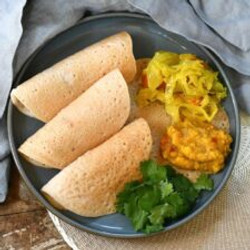
Serve fresh and hot with your choice of fillings.