 Sort ingredients
 helen
helen QR Code
 Listen
 Pdf
Pdf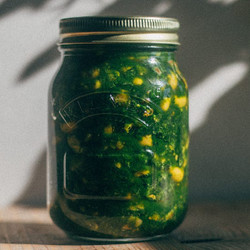
Wash the freshly picked wild garlic and spin or pat it dry.
Drain the cooked edamame and toast the hazelnuts for 10 to 15 minutes at 180°C (350°F).
Crush or blend the wild garlic in a food processor or pestle and mortar. I use the latter, as the action more closely mimics chewing, crushing the cell structure to extract fragrant juices and oil while leaving pieces of plant matter intact. It also has the added benefit of not generating heat. A food processor can climb to 60°C (140°F) if left running for too long, and both the aroma and microbes are sensitive to temperature.
Rub the papery skins off the hazelnuts and give them a light bashing to split them. Add everything into a bowl and mix well.
Tip the mixture into a clean, dry jar (hot soapy water should do the job), and place a small piece of baking parchment over the surface. This helps stop the top from being directly exposed to oxygen, where yeasts can form biofilms.
Secure the lid in place and leave the jar in a warm spot above 18°C (65°F) for 2 to 3 days.
After two days, the ferment should be active. Open the lid to release any pressure.
Once lightly fermented, move the jar to the fridge and let it age for 3 to 5 days before eating.
Safety | For safety, this ferment should reach a pH of 4.5 or lower prior to refrigeration.
The reduced amount of salt (compared to the usual 2 percent) compensates for the salt in the miso. My miso is usually around 10 percent salt, but check whichever one you use and base your calculation off that. If unsure, stick with my measurements. I think they’re a good average.