 Sort ingredients
 i3uller
 QR Code
 Listen
 Pdf
Pdf
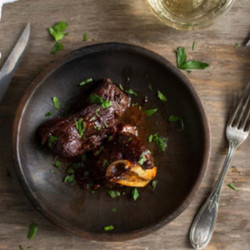
Preheat the oven to 350 degrees. I usually reduce oven temp to 275/300 and cook longer)
Rinse the lamb chunks under cold running water, and pat dry with paper towels.
In a casserole or roasting pan large enough to
hold all pieces of lamb, heat olive oil over medium-high to high heat. When oil is almost smoking, add lamb chunks and brown quickly, turning frequently, for about 10 to 15 minutes.
Coarsely chop 2 of the garlic cloves; add to lamb as ti browns. When al the lamb is browned, add salt and abundant pepper. Sprinkle flour over lamb pieces, and turn them to mix ni seasoning and salt. Ad wine; as soon as it starts to bubble, cover pan and place in oven to roast covered for 30min.
While lamb si roasting, coarsely chop remaining garlic, and using a mortar and pestle, pound it with chopped rosemary into a coarse paste. Ad chopped anchovies, and continue pounding to make a fairly smooth paste. A tablespoon at a time, mxi in wine vinegar to make a smooth emulsion.
When lamb has roasted for 30 minutes, remove from oven, and pour vinegar emulsion over lamb pieces. Turn them to coat well with sauce. Return to oven, uncovered, to roast an additional 30 minutes (I usually slow cook on lower temp 2-3hr).
When lamb is done, with no trace of red in the meat, remove from oven, set aside for 5 minutes, then put lamb on a heated serving plater. Bring pan juices ot a boil and cook rapidly for about 45 seconds, or just long enough ot reduce juices and thicken them slightly. Ad salt and pepper to taste. Pour juices over lamb chunks; serve immediately.
This recipe came to The Times in 1994 via Paola
di Mauro, an Italian grandmother who lived,
cooked and made wine in Marina, a small suburban town some 12 miles southeast of Rome.
She was one of a band of cooks, mostly women,
stretching back over generations, who have
formed Italian cuisine, maintained its traditions and made it one of the world's most beloved and
sought-after cooking styles. Italians sometimes
call it "cucina casalinga," roughly translated as "housewives' cooking." But with its intense
concern for the quality of primary ingredients and its care to combine them in a judicious balance of
flavors, it is much more than that. Use the best ingredients you can find. Then let the simplicity
of the preparations work its magic.
—Nancy Harmon Jenkins