 Sort ingredients
 trikota
 QR Code
 Listen
 Pdf
Pdf
In a medium saucepan, add 2⅓ cups dashi (Japanese soup stock), 1 Tbsp mirin, 1 tsp sugar, 1½ Tbsp soy sauce, and ⅛–¼ tsp Diamond Crystal kosher salt.
Bring the broth to a gentle simmer. Once the broth is simmering, remove it from the heat. Cover with a lid and set aside.
Follow the instructions on your concentrated mentsuyu bottle for the correct mentsuyu-to-water dilution ratio for noodle soup broth (shown here as めんのかけつゆ).
In a medium saucepan, combine the water, mentsuyu and mirin. For the brand of mentsuyu that I use, I add 2⅓ cups water, ⅓ cup mentsuyu (concentrated noodle soup base), and 1 Tbsp mirin. Bring it to a simmer over medium heat. Once simmering, remove the pot from the heat. Cover with a lid and set aside.
Bring a large pot of water to a boil. When the water comes to a full rolling boil, add 2 servings udon noodles and cook according to the package instructions. For fresh homemade udon, separate and untangle the strands of noodles with your hands, and cook for 10 minutes.
Using chopsticks, stir the noodles so they don‘t stick to the bottom of the pot.
When the noodles are done cooking, drain them in a colander and cool under cold running water.
Once the noodles are cool enough to touch, use your hands to rinse them well under the cold running water to remove the starch and give the noodles a firm texture. Then, switch to hot running water to warm up the noodles; alternatively, you can heat them up in a pot of hot water.
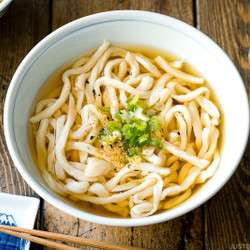
Serve the hot udon noodles in individual bowls. Pour the hot broth over the noodles and top with 1 green onion/scallion (chopped) and shichimi togarashi (Japanese seven spice) for a spicy kick (optional). For a more substantial lunch or dinner, you can top it with tempura, beef, fish cake and toasted mochi, tofu, Inari age, or vegetables.
You can keep the udon noodles and broth separately in airtight containers and store them in the refrigerator for up to 3 days.