 Sort ingredients
 jane62958
 QR Code
 Listen
 Pdf
Pdf
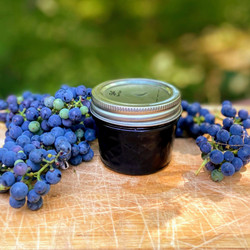
Place the rinsed and stemmed grapes in a kettle. You can add a few tablespoons of water here to help prevent sticking. Heat over medium-high heat, using a potato masher or wooden fermentation tapper to break them down.
Once the grapes have come to a boil and have sufficiently broken down, either strain through a cheese cloth into a liquid measuring cup or run through a mesh strainer using the tapper or a spoon to force as much liquid and pulp through.
Pour grape juice into a liquid measuring cup to determine the amount of sugar and lemon juice you should add.
Wash and sanitize jars, rings, and lids. Keep warm. Fill the canner with enough water to cover the jars by at least 2 inches of water. Cover and heat on high. Watch the temperature, you want a simmer but not a boil when you place the jars in the water.
Place the juice in a large kettle. For every cup of liquid, stir in ½ cup sugar and a ½ tablespoon lemon juice. Begin to heat over medium-high heat, stirring often. Begin to heat over medium-high heat, stirring often.
Heat to 8 degrees above the boiling point of water. If you are at sea level, the gelling point is at 220 degrees. For every 1000 feet of elevation, you subtract 2 degrees.
Once the jelly has reached the gelling point, remove from heat. Ladle into prepared jars, leaving ¼ inch head space. Wipe rims of the jars with a damp cloth, add lids and rings, tightening to fingertip tight. Place in the canner, increasing the heat to high. Once the canner reaches a boil, process for 10 minutes. Remove from heat and allow jars to cool in the canner over 5 minutes. Remove from canner and allow to rest for 12 hours before storing.