 Sort ingredients
 emvi74
 QR Code
 Listen
 Pdf
Pdf
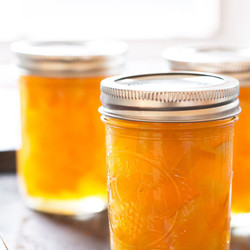
Discard any that are moldy or damaged.
Cut ¼ inch off from the ends of the lemons. Working one at a time, stand a lemon on end. Cut the lemon in half lengthwise. Cut each lemon half into several segments, lengthwise.
As you cut the lemons into segments, if you can, pull off any exposed membranes. Just get the ones that are easy to get to, ignore the rest. When you've cut down to the final segment, cut away the pithy core. Remove all seeds from the segments. Reserve the seeds and any removed membrane or pith. You will need them to make pectin.
Cut each lemon segment crosswise into even pieces to make little triangles of lemon peel and pulp.
Put all of the seeds, membranes and pith you removed from the lemons into a bag fashioned out of two layers of cheesecloth or a muslin jelly bag.
Place the lemon segments and water into a large, wide pot. Place the pectin bag in the pot with the fruit pulp and tie it to the pot handle.
Bring to a strong boil on high heat. Let boil, uncovered, for about 25-35 minutes, until the peels are soft and cooked through.
Remove from heat. Remove the pectin bag and place it in a bowl. Let cool until it is comfortable to touch.
Once your pectin bag has cooled to the point you can handle it, if you want, squeeze it like Play-doh to extract any extra pectin. Return this pectin to the pan with the lemon mixture.
Measure out your sugar and add it to the pan.
Heat the mixture on medium high and bring it to a rapid boil, stirring occasionally.
Secure a candy thermometer to the side of the pan, or check the jelly temperature with an instant read thermometer. The marmalade may take anywhere from 20 to 35 minutes or so to be ready to pour out.
Test for the gelling point: the mixture reaching a temperature of 218 to 220°F or putting a bit of it on a chilled plate 'wrinkling up' when you push it with your finger tip.
While the marmalade is in its second cooking stage, sterilize your jars using your preferred method.
Once the jelly has reached 218-220°F or its 'wrinkly' stage, remove the jelly pot from the heat. Carefully ladle the jelly into the jars, leaving ¼ inch of head space at the top of the jars.
Wipe the rims clean with a clean, wet paper towel. Place the clean, dry lids on the jars, securing with jar rings until they are fingertip-tight.
Allow the jars to sit overnight. You will hear them make a popping sound as a vacuum seal is created.