 Sort ingredients
 damelody
 QR Code
 Listen
 Pdf
Pdf
Combine the levain and the 740 grams of water. Use a Thermapen ONE to make sure the water is between 80° and 85°F (27° and 29°C).
Add half of each of the flours to the levain-water mixture and combine to form a smooth batter.
Add the rest of the flour to the batter and mix it until it is a shaggy mass with no dry lumps visible.
Allow the dough to rest, covered, on the counter top for 30 minutes. This will allow the natural enzymes in the flour to create a more easily workable and shapeable dough that will have a better texture.
Uncover the dough and sprinkle the salt evenly over the surface.
Add the remaining 50 grams of water, also around 85°F (29°C), wetting all the salt.
Mix the dough by squeezing and pinching it between your thumbs and fingers. Continue until you feel no lumps in the dough.
Cover the dough and let it rest in a warm place (80–90°F [27–32°C]) for 1 hour, until it has risen by about 30%.
Flour a work surface.
Tip your dough out onto the surface and scrape as many bits free from the bowl as possible.
With a bench scraper or sharp knife cut the dough into two equal halves.
Working with one lump, created the shape and some surface tension on the bread by basically doing another fold: pull the part that is farthest from you out away from you and then fold it in onto the top of the lump.
Do the same for the sides and the part nearest you.
Turn the dough over and pull and tuck the edges in under the loaf, creating tension on the surface of the loaf.
Repeat with the other loaf.
If you have proofing baskets, sprinkle them with rice flour. If not, line two bowls with cloths (such as a cotton or linen napkin) and sprinkle the cloths with rice flour.
Place the loaves seam-side up in the bowls/baskets.
Place the loaves in a warm place to proof for as little as one hour in an oven with a proof setting or a cooler with a few inches of hot water in the bottom of it. Your proof-box should be between 75° and 85°F (24° and 29°C). They should rise and feel airier, but not be completely inflated. They can also proof in the refrigerator overnight. (See section on proofing times above.)
While the bread is proofing, preheat your oven to 500°F (260°C) with a lidded cast-iron pan inside.
(Note: your bread will bake better if you have a baking stone on the oven rack below your bread. It will act as a buffer against the heating elements in the bottom of your oven.)
Once the bread is proofed, turn it out onto a piece of parchment paper.
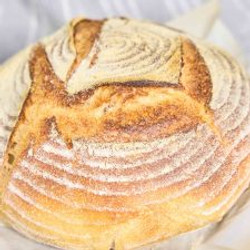
Score the top of the loaf with a sharp knife or a razor blade, cutting a square around the crown of the bread.Remove the cast-iron pot from the oven.
Lift the parchment paper with the bread on it and lower it carefully into the cast iron pot.
Place the lid on the pot, put it in the oven, and lower the oven temperature to 475°F (246°C).
Set a timer for 20 minutes and bake.
Once 20 minutes has elapsed, set your ChefAlarm to 200°F (93°C), remove the lid from the pot and insert a probe into the center of your bread.
When the alarm sounds on your ChefAlarm, verify the temperature with your Thermapen ONE.
Remove the bread from the oven and place the new, uncooked loaf in the pot, following the same method for cooking it.
Allow the bread to cool on the countertop for at least an hour.
Slice, or just tear the bread into chunks, eating it with plenty of good, salted butter and jam.