 Sort ingredients
 willa
willa QR Code
 Listen
 Pdf
Pdf
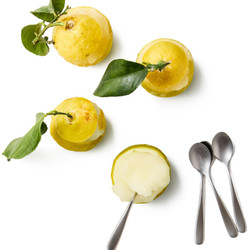
Look for large, handsome lemons – as the season proper gets underway in southern Europe, there will be increasing amounts of choice, which means this is a recipe to bookmark for the winter (assuming you don’t want to make it for pudding this evening).
Make sure you get at least one unwaxed fruit, albeit of any size, because you need it for its zest.
Start by making a syrup, which may seem a faff, but it will help dissolve the sugar without you having to heat the lemon juice and so dull its flavour.
White sugar is preferable colour-wise, while golden is fine; brown, however, will change the taste of the sorbet.
Put the sugar in a small pan with 75ml water.
Finely grate the zest of the unwaxed lemon into the sugar pan, then set it over a medium-high heat and cook, stirring occasionally, until the sugar dissolves.
Take off the heat and leave to cool completely.
Minus the lemon zest, this is also how you make simple syrup for cocktails.
Carefully trim the bases off the four remaining lemons, so they will sit flat on a work surface, then cut off the tops about a quarter of the way down – these will be the sorbets’ lids later.
Use a small, preferably serrated knife (a grapefruit knife is ideal, if you have one; a pointed teaspoon might also come in useful for cleaning the shells) carefully to cut out all the flesh inside the lemons.
Roughly chop the lemon flesh, then press it through a fine sieve to capture every last drop of juice (I use my hands).
Gently squeeze the hollow shells and lids, too, to free any remaining juice from them.
Juice the zested lemon, too, then pour all the juice into a measuring jug: you should have about 300ml in total, but don’t worry about being too exact.
Stir a pinch of salt and the optional alcohol into the lemon juice (though you can certainly leave it out, the booze does help improve the texture of the sorbet); if you’re using limoncello or similar, add a little more to make up for its lower alcohol content.
You could also at this stage add finely chopped fresh mint or basil leaves.
Add equal amounts of syrup and cold water to the juice mixture, 25ml at a time in total, and taste after each addition, until the mix is to your liking – remember that freezing will mute the flavour slightly, so it should be really quite intense.
Even so, depending on the lemons and your palate, you might not need all the syrup.
Freeze and churn in an ice-cream maker.
If you don’t have an ice-cream maker, pour the sorbet into a sturdy, freezer-proof box that’s large enough to hold it in a fairly shallow layer, then freeze for about 90 minutes, until it’s starting to go solid around the edges.
Use a fork, whisk or food processor vigorously to beat the mix to an icy slush, then return to the freezer and repeat the freeze and whisk at least twice more.
Once the sorbet is firm, scoop it into the reserved lemon shells, filling them generously so it spills out a bit.
Top each with a lid, stand on a baking tray and freeze again until you’re ready to eat.
The sorbets are best consumed soon after making, but they should keep well for up to a week (and, though the texture will deteriorate, they will still be delicious for much longer).