 Sort ingredients
 gjohnson726
 QR Code
 Listen
 Pdf
Pdf
Fire up a big pot or Dutch oven over medium heat and toss in the diced bacon. Let it sizzle until it’s crispy and gives up all that glorious fat. Scoop it out and set it aside—leave the fat behind, friends, it’s flavor central! (Tip: If your bacon’s stingy with fat, splash in some oil—no big deal.)
Season your beef chunks with salt and pepper like they’re heading to a fancy dinner. Crank the heat to medium-high and sear them in the bacon fat until they’re golden brown all over. Big pieces are fine—they’ll fall apart later. Once they’re gorgeous, pull them out and set them aside. (Special Technique: This is the Maillard reaction, friends—brown means flavor, and we’re not messing around!)
In a separate pan, heat up some clarified butter or oil over medium heat. Add your sliced onions—cut them about 3mm thick, not too small, not too big. Cook them low and slow, stirring now and then, until they’re a deep, golden brown. Takes about 20–30 minutes, but it’s worth it. Set them aside. (Chef’s Twist: Tradition skips this, but caramelized onions beat raw ones any day—trust me, it’s like hamburger heaven!)
Back in the beef pot, toss in your diced carrots and celery. Sweat them over medium heat for 5–7 minutes until they soften up. (Pro Trick: Small dice too tricky? Grate the carrots with a cheese grater—boom, easy soffritto!)
Stir in the minced garlic and let it perfume the air for a minute. Then add the tomato paste and sauté it for 2–3 minutes—it’s gotta wake up and sing! (AnotherTwist: No tomatoes in the old recipe, but this adds depth—don’t tell my grandma!)
Pour in the white wine (red works too, live a little!) and scrape up all those tasty browned bits from the bottom with a wooden spoon. Let it simmer a few minutes until it reduces a bit. (Fun Fact: Tradition says white, but I say use what’s open—deglazing’s the key here!)
Toss the crispy bacon and browned beef back into the pot. Give it a stir—it’s a happy reunion!
Pour in the beef stock and drop in the bay leaf. Bring it to a gentle simmer. (Stock Note: Homemade? You’re a star. Store-bought? Still delicious.)
Pile those caramelized onions on top like a big, cozy blanket. Don’t mix them in yet—just let them sit there looking pretty.
Cover the pot and turn the heat down to super low—think “bloop bloop bloop.” Let it cook for 2.5 to 3.5 hours, checking every 45 minutes or so to make sure it’s not sticking. Or pop it in a 350°F oven for 3 hours—check after an hour, just in case. (Patience Alert: This is where the meat gets so soft it practically melts—don’t rush it!)
When the ragu is almost ready, boil your pasta in salted water per the package. Save a cup of that starchy pasta water before draining—it’s gold, friends!
Once the meat’s falling apart, stir in the chopped basil. Taste it—add salt and pepper if needed, but go easy; the cheese is coming. (Basil Bonus: Not traditional, but it’s better with it—don’t argue, just eat!)
Toss the cooked pasta with the ragu in the pot or a big bowl. Add a splash of pasta water to help the sauce stick like glue. (Pro Move: That starchy water is the secret to a silky sauce—don’t skip it!)
Mixin some grated Pecorino Romano—start light, taste as you go. (Cheese Warning: It’s salty, so don’t overdo it, or you’ll be chugging water all night!)
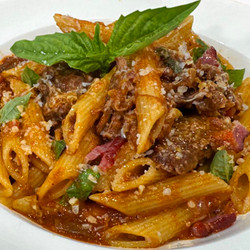
Plate your masterpiece, sprinkle on more cheese, and top with a few basil leaves—tear them by hand if you’re feeling fancy. Put a chunk of that tender meat right on top—gorgeous, right?