 Sort ingredients
 alistairb
 QR Code
 Listen
 Pdf
Pdf
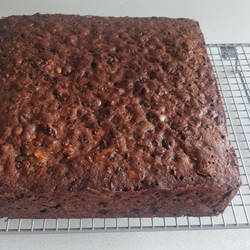
Start early! You should be cooking the basic cake in October. Marzipan the cake at the end of November, then start icing a couple of weeks before the big day.
Line a 10 inch square cake tin with a double layer of greased baking parchment. Wrap the tin with a double layer of brown paper so that it rises well above the rim of the tin. Preheat the oven to 150C.
Sift all the dry ingredients - flour, seasoning, spices, and ground almonds - together in a large bowl. Mix in all the finely chopped fruits and chopped almonds.
Cream together, in a separate bowl, the sugar, butter, and grated lemon rind, until fluffy. Beat in the 8 eggs, one at a time. Don't worry if it splits.
Stir the butter and egg mixture into the flour and fruits, followed by the lemon juice and 75ml of the brandy. The mixture should be soft and moist, if not add a little milk.
Spoon the cake mixture into the prepared tin, level the top, and bake the cake on a low shelf so the cake is in the middle.
Cook at 150C for 1.5 hours. Then reduce to 130C for a further 3 to 3.5 hours. Cover the cake with a square of baking parchment to prevent burning in the last couple of hours. The cake is done when it begins to shrink from the sides.
When cooked and cooled enough to remove from the tin, leave on a rack to cool completely. Wrap the cake in baking parchment and then seal in foil. In the weeks leading up to Christmas, make holes in the bottom of the cake with a skewer and lace with the remaining brandy before icing.
In November, marzipan the cake.
Warm the apricot glaze so it can easily be applied with a pastry brush.
Roll the marzipan 5mm thick. Cut strips for the sides of the cakes and glue in place with the apricot glaze.
Continue with the top of the cake, try to maintain the square shoulders of the cake in the finished marzipan.
There will be left over marzipan that can be used to create decorations for the cake.
Leave the cake in a place where the marzipan can dry out.
In the weeks leading up to Christmas start icing the cake.
Whisk the egg whites in a large bowl until frothy.
Stir in the sifted icing sugar, a little at a time while beating the mixture thoroughly. When half the sugar has been added, beat in the lemon juice and glycerine. Be careful not to over beat the icing if using an electric mixer, a fluffy mixture will cause a rough surface.
Continue to add more sugar, beating well with each addition until the icing forms soft peaks when pulled up with a wooden spoon. If being used for piping, the mixture should be a little firmer.
Prevent the icing from drying out by covering the surface with clingfilm. Leave for 24 hours to allow bubbles to rise up. Work gently before using.
Ice the cake by applying multiple thin layers, allowing 24hrs between each layer to dry. Keep the icing in a usable state by always covering the surface with clingfilm .