 Sort ingredients
 kenlang
 QR Code
 Listen
 Pdf

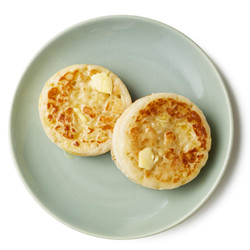
You will need crumpet rings to make these. I’ve recently discovered nonstick ones, which make life a lot easier, though the plain metal sort are cheaper. You can also use (non-fluted) biscuit cutters, or make your own from folded heavy-duty foil (look online for directions).
Put both flours (or use 250g of one sort, if you prefer, but I find this combination gives the best texture) in a large bowl or stand mixer, then whisk in the yeast, followed by the salt and sugar. If using fresh or active dry yeast, you’ll need 12g or 6g, respectively, and to reactivate the latter according to the packet instructions.
Put the milk and 50ml water in a saucepan, gently warm to tepid, then mix into the dry ingredients. Beat until there are no lumps of flour visible, then cover with a tea towel or similar, and leave in a warmish, draught-free place for about 90 minutes, or until doubled in size (putting the dough in a glass bowl will make this easier to judge).
Once the batter has risen to your satisfaction (trust your eyes rather than the clock), mix the baking powder with 70ml tepid water, then beat into the dough until smooth and well distributed. Cover the bowl again and leave to prove in a similarly temperate spot for another 30 minutes.
Meanwhile, melt the butter (or use oil, if you prefer), then use it to grease four crumpet rings, even if they are nonstick. Once you’re ready to cook, lightly grease a large frying pan, flat griddle or tawa (I do prefer oil here), then put it on a medium-low heat until a drop of water sizzles on the surface.
Put the greased crumpet rings in the pan, making sure they sit flat against the surface, then ladle a spoonful of batter into each one, so it fills them by about a third – the batter should begin to bubble almost immediately. Cook for eight to nine minutes, until the crumpets look fairly dry on top.
Carefully lift off the rings, bearing in mind that they will be hot, then flip over the crumpets and cook on the other side, until lightly golden underneath.
If you’re not eating them immediately, lift the pale golden crumpets out of the pan and put them on a rack to cool. Alternatively, wrap each cooled crumpet well, put a small sheet of greaseproof paper between each one so they don’t stick, and freeze for up to three months.
If you don’t have crumpet rings, prepare the pan as above, then drop in spoonfuls of the batter, keeping them spaced well apart, because they will spread. Once they begin to look dry on top and set below (which will happen quickly), flip and cook as above, until golden brown on both sides. Consume or store as in step 8.