 Sort ingredients
 userdd6767
 QR Code
 Listen
 Pdf
Pdf
Season the chicken pieces generously with salt on all sides. Heat a deep heavy-bottomed pot, such as a Dutch oven, over medium-high, pour in a glug of olive oil. When the oil is hot, add the chicken, skin side down.
Cook the chicken until the first side is deeply browned, about 15 minutes. (Don’t try to move the pieces for the first couple of minutes to allow a crust to form, which will help the skin release from the bottom of the pot.) Flip the chicken, cook for another 10 minutes or so to brown the other side a bit, then transfer the chicken pieces to a plate.
Carefully pour off all but about 2 tablespoons of the grease from the pot. Reduce the heat to medium. Add the carrot, celery, onion and shallot, and cook, stirring and scraping occasionally so the moisture from the vegetables deglazes the chicken juices cooked onto the bottom of the pot, until the vegetables are beginning to brown and soften, about 10 minutes.
Return the chicken and any accumulated juices to the pot. Add 1 quart water and the thyme, rosemary, bay leaf and chile. Bring the water to a lively simmer and cook, with the lid on but partially cracked, until the chicken is completely tender and falling off the bone, about 1 hour. (Alternatively, bring the liquid to a simmer on the stovetop and then transfer the partially covered pot to a 350-degree oven.)
Once the chicken has cooked, let it cool for a few minutes, then take it out of the liquid (but keep the cooking liquid in the pot) and let it cool until you can comfortably handle it. Pull off the skin and discard, then pull off the meat in large shreds (chop the larger ones) and return the chicken to the cooking liquid.
Simmer the chicken and liquid until the liquid has reduced a bit and you have the consistency of a chunky sauce. Remove and discard the thyme and rosemary sprigs, the bay leaf and the chile. Taste the ragù and add more salt if needed. You’ll need half the amount of ragù to coat 1 pound of pasta; transfer the remaining ragù to a separate container, let cool and freeze for up to 4 months.
While the ragù simmers and reduces, bring a large pot of salted water to a boil. Stir in the pasta and cook until 2 minutes short of al dente. Reserve 1 cup of pasta cooking water, then drain the pasta and transfer the pasta to the pot with the ragù.
Finish cooking the noodles in the ragù, tossing and adding plenty of splashes of the reserved pasta water, until they are perfectly al dente. If you think the ragù and noodles look a bit watery, simmer for another few seconds to tighten up the consistency, bearing in mind that adding cheese will thicken the mixture. If the sauce seems dry, add a bit more pasta water.
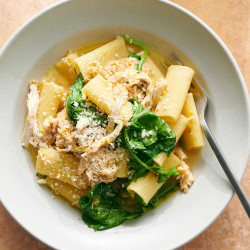
Reduce the heat to low, add the Parmesan, and toss to incorporate and emulsify, adding splashes of pasta water if needed to keep the consistency creamy and prevent the cheese from clumping. If you’d like, stir in a handful of greens.
Divide the pasta among bowls and serve right away, with more cheese to add at the table.