 Sort ingredients
 asunnysideupday
 QR Code
 Listen
 Pdf
Pdf
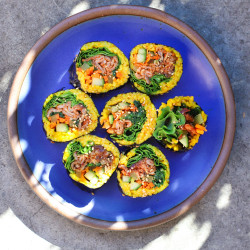
Place the rice in a medium bowl, cover with cold water, gently swishing the rice with your fingers, and drain. Repeat the process until the water runs clear.
Place the drained rice in a medium saucepan along with the turmeric, pepper, and 1¾ cups water, and stir to combine. Cover, bring to a boil over medium high heat, reduce the heat to low, and cook until the rice is tender and cooked through, about 18 minutes. Turn off the heat and let stand, covered, for 5 minutes. Alternatively, you can cook the turmeric rice in a rice cooker.
Add the sesame seeds, sesame oil, and salt to the turmeric rice, stir to combine, and set aside.
While the rice is cooking, prepare the cooked vegetable fillings and bulgogi. To make the spinach, heat the canola oil in a large skillet over medium high heat. Add the spinach and cook, stirring occasionally, until wilted, tender, and any water has evaporated, about 2 to 4 minutes. Transfer the spinach to a small bowl and let it cool for 5 minutes. If the spinach still looks watery, gently squeeze out any excess liquid and return to the bowl. Add the sesame oil, sesame seeds, season with salt, to taste, and set aside.
Return the same skillet over medium high heat, add the carrots, and cook until they just start to become pliable, but still retain an al dente bite, about 1 to 2 minutes. Transfer to a small bowl, season with salt, to taste, and set aside. Reserve skillet for later use.
Place the Omsom Korean Spicy Bulgogi Starter and Sirārakhong Hāthei chillies in a medium bowl and mix well. Add the sliced pork and shallots, massaging the sauce into the meat.
Return the skillet to high heat and heat until the pan is almost smoking. Add the dressed meat and shallots, spreading them into a single layer, and cook undisturbed until the meat starts to brown and caramelize, about 4 minutes. Stir and continue to cook until the meat is cooked through, about another 4 minutes. Turn heat off and leave the meat in the skillet.
To assemble the gimbap, place a piece of gim shiny side down on a bamboo rolling mat. Take ¼ of the rice and spread it in a thin, even layer over the gim, leaving a 1½-inch strip at the top. Arrange your vegetables and meat across the lower part of the rice-covered gim, leaving ½-inch strip uncovered at the bottom. Start with some lettuce, then some bulgogi, sesame spinach, a few strips of pickled radish and cucumber, and finishing with some carrots.
Lightly wet the naked part of the gim with your fingers, then gently roll the bamboo mat up and away from you, using your fingers to keep the filling in place, so the rice and gim start to wrap around the fillings. Pushing the mat as you roll, continue to roll until roll is fully sealed. Grab the mat with both hands, pulling back slightly and then squeezing to tighten the center and ends of the roll. Set the finished roll aside and repeat with the remaining gim, rice, and fillings.
Brush the tops of the finished gimbap with a little extra sesame oil and sprinkle with sesame seeds, then using a sharp knife, cut each roll into 6 to 8 pieces. (It helps to wipe down the knife between every few slices to maintain a beautiful, clean midsection.)
Arrange the sliced gimbap on a platter, sprinkle with a few more sesame seeds, if desired, and serve with soy sauce for dipping.