 Sort ingredients
 dh_bressler
 QR Code
 Listen
 Pdf
Pdf
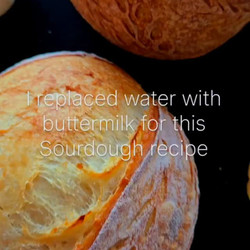
Mix ingredients well. Spend at least 10 minutes mixing if you're doing it by hand.
The dough may feel more firm than a dough of similar hydration using water, and you might notice it is taking longer to ferment than usual, but the results are worth it.
After 40 minutes of resting, do one round of stretch and folds.
Let the dough rest for an additional 40 minutes and stretch and fold.
After your dough has increased, about 60% in size punch it down, make it into a ball, and let it rest.
Once the dough has almost doubled in size (about 80-90% rise), you can divide the dough in 2 and shape them before placing them in the fridge to cold proof overnight.
Preheat oven to 500F.
Bake for 25-30 min with lid on at 430 F.
Bake for 10 minutes with lid off at 400 F.
If you want more recipes like this, then don't forget to follow and hit save to use later.
Note: Don't be afraid to push fermentation a little extra if you think your dough can handle it.
Read your dough during fermentation. This is key for a successful loaf.
Use a shaping method you are already comfortable with. I used the caddy clasp technique and placed it in a banneton to cold proof overnight.
Add steam: if you use a DO, it is often enough. But if you struggle with steam, you can spritz your loaf with water before baking.
If you're using storebought buttermilk, you can add a little water to the dough until it becomes more manageable.