 Sort ingredients
 willa
willa QR Code
 Listen
 Pdf
Pdf
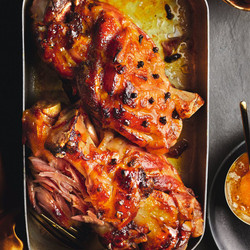
Rinse the ham hocks, then soak them in a large pan of cold water for at least 12 hours and up to 24 hours. Change the water once or twice during this time, if possible.
The next day, heat the oven to 170°C/150°C fan/gas 3½. Take the hocks out of the water, rinse them again, then put them meaty-side down in a small roasting tin in which they fit snugly (I use one that’s 36cm x 24cm x 6cm). Using 1 tsp mixed spice for each hock, rub most of it into the surface of the meat where it’s exposed at the ends, and shake the rest over the tops of the hocks.
Halve the onion, then stud the cut side of each half with 3 cloves before tucking them into the tin with the hocks.
Pour the boiling water into the tin until it covers the base by about 1cm (you might not need all the water, or you might need a little more, depending on the size of your tin). Cover the tin tightly in foil, then cook in the oven for 3 hours, by which time the meat should feel tender when you pierce it at the thickest part of the hock with a dinner knife. When it reaches this point, take the tin out of the oven and turn up the heat to 220°C/200°C fan/gas 7.
Working one at a time, lift the hocks out of the pan and onto a board. You may want to let them stand there for 5 minutes so they’re not piping hot and, while you wait, strain the spiced liquid into a heatproof measuring jug to save for making the soup. Carefully peel and cut away the top layer of rind to leave a thin layer of fat. Score this fat into diamonds – trying not to cut into the actual meat.
Cover a shallow but lipped oven tin with the layer of foil you used to cover the hocks earlier and sit the hocks on top. Stud the middle of each diamond you have scored in the fat with a clove. In a small bowl, mix 100g of the marmalade with 25g of the mustard, then spoon this over the studded fat layer of each hock until it is covered evenly. Use a pastry brush to paint the glaze over the rest of the meat on the hocks, so they’re sticky and shiny all over.
Return the ham hocks to the oven for 20 minutes, but keep an eye on them and start checking after they’ve had 15 minutes to see if the glazed fat is burnished and darkly golden. You might need to give them a little bit longer, but stay nearby to make sure the glaze doesn’t go too far and blacken.
Mix the remaining 100g marmalade and 15g mustard in a small bowl to serve with the hocks. Carve the meat from the hocks as best you can, cutting the rest into chunks, then pulling off any remaining shreds of meat with a fork (save the bones for the soup). Arrange the meat on a warm plate and serve with the sauce, along with pickled red cabbage and steamed potatoes (if you like).