 Sort ingredients
 byrd42
 QR Code
 Listen
 Pdf
Pdf
Heat the vegetable broth: Heat a large stockpot on medium-high and add the vegetable broth. Bring it to a simmer. You’ll want the broth hot when you add it to the buckwheat.
Once the broth is simmering, turn the heat to low-medium to keep it hot.
Make the risotto: Heat a large stovetop pan on medium-high heat. Add the shallots and cook for 1–2 minutes, continuously stirring.
Toast the buckwheat by adding it to the shallots. Continue to stir for 1–2 minutes.
Turn down the heat to medium and stir in the garlic. Cool for 30 seconds.
Deglaze the pan with the tamari and red wine vinegar. Cook on medium heat until the vinegar and tamari have evaporated, about 1–2 minutes.
Then, slowly add just one cup of the hot vegetable broth. Stir often to coat the buckwheat and allow it to completely absorb the liquid. Adjust the heat so the liquid is always gently boiling.
Once the liquid has been absorbed, then add the next cup. Stir frequently until the liquid has been absorbed.
Continue to add liquid and cook the buckwheat until it reaches the al dente stage (or until it is done to your liking). Start tasting the buckwheat for doneness around the 10-minute mark. This should require 3–4 cups of the vegetable broth.
In the meantime cook the mushrooms, tomatoes, and peas: Heat a large stovetop pan on medium heat. Add the mushrooms and cook for one minute before adding 2 Tbsps of the vegetable stock you’re using for the buckwheat. (Alternatively, you could use water to deglaze the pan.)
Add the tomatoes, garlic powder and onion powder, and cook for another 2–3 minutes, stirring occasionally.
Finally, stir in the peas and turn off the heat.
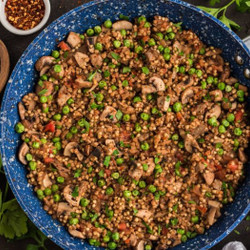
Stir the mushrooms, tomatoes and peas into the risotto once it’s done.
Divide the risotto between two plates or bowls. Taste for additional seasoning of choice. Top with parsley, ground black pepper and red pepper flakes (if using), and nutritional yeast, if desired.