 Sort ingredients
 ssherven
 QR Code
 Listen
 Pdf
Pdf
Peel the red onion and cut it into small chunks.
Place a large pan over medium-low heat and add a generous amount of extra virgin olive oil, about 10 tablespoons.
Let the onion cook gently for about 7 minutes, stirring with a wooden spoon until it softens and becomes golden brown. Add a splash of water to prevent it from burning and keep stirring.
Squeeze the nduja from its casing then add it directly into the pan. Reseal any leftover nduja and save it for another recipe. Stir continuously until the nduja melts into the onion and olive oil.
Pour in the bottle of passata, stir well, and bring the sauce to a gentle simmer. Cook over medium-low heat for at least 30 minutes, or up to 1 hour for a richer, deeper flavour.
Season with a touch of salt and pepper to taste.
Bring a large pot of water to a boil and add 1 tablespoon of rock salt. Cook the rigatoni according to the packet instructions, stirring occasionally to prevent it from sticking together.
Turn off the heat under the sauce. Tear the fresh basil leaves by hand and stir them through the sauce.
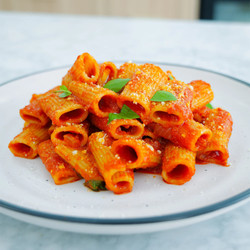
Before draining the pasta, reserve 1 cup of pasta water. Using a strainer, transfer the rigatoni directly into the sauce, allowing a little pasta water to come across with it.
Toss everything together using a wooden spoon. Add a splash of reserved pasta water as needed to loosen the sauce and help it coat every piece of pasta.
Add the Pecorino Romano and continue tossing until the cheese melts into the sauce and becomes beautifully creamy.