 Sort ingredients
 emmapol81
 QR Code
 Listen
 Pdf
Pdf
Mix. To a large bowl, add the flour, salt, yeast, olive oil and room temperature water. Mix with a wooden spoon until all the flour is hydrated. The mix should be shaggy but not sloppy.
Rise. Drizzle some olive oil over the top of the dough, cover the bowl with plastic wrap or a tight-fitting cover and refrigerate overnight at least 18 hours.
Deflate and shape. At least 2 hours before you want to bake the focaccia, take the bowl out of the fridge and uncover it. Using your hands or a dough scraper deflate the dough slightly and transfer the dough to a generously oiled baking tray (9x13) or sheet pan. Shape it loosely by grabbing each end and folding it over like you would a letter. Flip the dough over so the seams are on the bottom. Cover the tray with a towel and set aside for 1.5-2 hours.
Dimple. Preheat your oven to 425F/220C. The dough should now have spread covering the surface of the baking tray. If not, you can help it stretch to the edges by carefully easing it to the corners. Drizzle more olive oil over the dough and start dimpling with your fingers, covering the entire surface. This creates valleys and mountains in the dough and you should also see air bubbles forming.
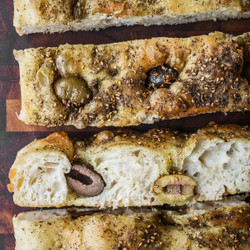
Dress. In a small bowl, combine the za’atar with olive oil to form a loose paste. Drizzle the za’atar paste all over the dough. It doesn’t have to be covered evenly. Trust your gut and go with the flow. Nestle in a handful of olives. Remember, less is more.
Bake. Bake in the preheated oven for 20-25 minutes, until golden brown. Every oven is different, so your focaccia may need more time.