 Sort ingredients
 cburns1
 QR Code
 Listen
 Pdf
Pdf
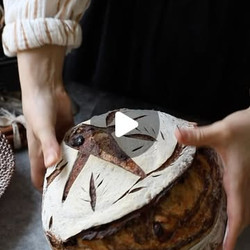
In a medium bowl, add flour, sourdough starter, and water. Using a wooden spoon, mix to combine and then transfer into a clean jar.
Place a rubber band at the starting point to track its growth. Place the lid on top without sealing.
Let rest for 3 to 6 hours until it raises to 2 ½ times the original size.
In a small bowl, add 1 ½ tablespoons (21g) of the water and salt. Stir until the salt dissolves and set aside.
In a large bowl, add the levain and the remaining water and whisk until everything is incorporated.
Add flour and sugar. Shaping your hand like a claw, bring the ingredients together, mixing and periodically squeezing the dough together for 3 to 5 minutes until everything is fully incorporated.
Cover the bowl with a kitchen towel or plastic wrap and let it rest for 1 hour at room temperature.
Pour the dissolved salt over the dough. Knead by gently stretching and folding the dough until all of the liquid is incorporated and the texture is smooth.
Cover the bowl once again and let rest for 40 minutes.
Lift the dough up from the middle,
stretching and folding it over itself.
Turn the bowl and repeat this process so
each edge is incorporated back into the middle of the dough. Coveronce again and let rest for 40 minutes.
Repeat this resting and folding process
three more times. Each time the dough
should be a little more taut and elastic.
Lightly flour a work surface and transfer
the dough onto the middle. Stretch the
dough into a rectangular shape. Begin
shaping the dough by folding the long
edges into the middle over each other.
Then, roll the dough toward yourself,
slightly stretching it and pressing the
inside of the dough lightly to form a
cylinder shape with the open edge
underneath the dough. If you are using a
circular proofing basket, make the loaf
round by placing your hands on either
side of the dough with the edges of your
palms against the surface. Holding your
left hand as a guide, use your right hand
to push the outer edges of the dough
lightly underneath while turning slightly
Continue this motion one or two times
until
lightly rounded. Carefully lift the ball
onto your left hand, maintaining the
dough shape, and place in the proofing
basket with the open edge up. Lightly
pull the seam edges together and pinch
to seal. Let sit at room temperature for
10 to 15 minutes. Cover the dough
completely with plastic wrap or a plastic
grocery bag and keep it in the
refrigerator overnight, 12 to 14 hours.
The next day, place a Dutch oven in the
oven and preheat to 450F for at least 15
to 20 minutes. Remove from the fridge
Line a work surface with parchment
paper. Flip the basket onto the
parchment paper so
the seam edge is down. Holding a sharp
razor at a 45 degree angle, score the
surface of the dough ½ inch deep. Add
additional small cuts in a pattern to your
preference.
Immediately remove the Dutch oven
from the oven and transfer the bread to
the preheated pan with the parchment
paper. Cover with a lid and bake for 25
to 30 minutes. Then remove the lid and
bake another 15 to 20 minutes until
deeply golden brown. If you have a kitchen
thermometer, the bread should reach an
internal temperature of around 200F.
Remove from the Dutch oven and cool
on a rack for 30 to 40 minutes before
slicing
Bon appétit!