 Sort ingredients
 willa
willa QR Code
 Listen
 Pdf
Pdf
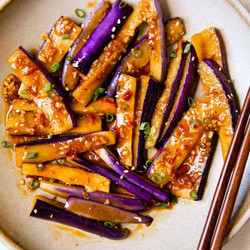
Slice the eggplant into 2.5 to 3-inch sections. Then, slice each section into batons (or strips) that are about ¼ to ½-inch thick. Set the eggplant aside.
Add ¾ cup of oil to a wok and heat it over medium-high heat. Once the temperature reaches about 350ºF to 360ºF, it is ready for frying.
Working in batches, add a large handful of eggplant batons to the wok. Fry for about 1 to 2 minutes, flipping the eggplant halfway. Transfer the eggplant batons into a spider spatula to shake off any excess oil and then transfer to a plate.
Once all the eggplant has been cooked, turn off the heat. Pour some of the excess oil into a heat-safe bowl, leaving about 2 tablespoons of oil in the wok.
In a small bowl, make a cornstarch slurry by whisking the water with the cornstarch.
Pour the Sichuan peppercorns into a bowl and grind them until they turn into powder. Sift out the husks.
Heat the wok (with the 2 tablespoons oil in it) over medium-high heat again. Add the garlic and ginger and cook for about 30 seconds to 1 minute, until fragrant. Add the doubanjiang and stir. Cook for another 30 seconds.
Add the ground Sichuan peppercorn, gochugaru, sugar, and salt. Stir to combine.
Whisk the cornstarch slurry again and pour it into the wok. Bring the liquid to a rapid boil and let the sauce simmer for 30 seconds to a minute to thicken slightly.
Add all the eggplant back into the wok and stir to combine with the sauce. Turn off the heat and transfer the eggplant to a serving plate. Garnish with sliced scallions and toasted sesame seeds, if desired.