 Sort ingredients
 caitertotz
 QR Code
 Listen
 Pdf
Pdf
Warm the skyr by microwaving it in a microwave-safe bowl for 30 seconds until slightly warm to the touch. Set aside.
Proof the yeast by warming the milk to 110 degrees F. Combine the warm milk, yeast, and a small pinch of the measured sugar in a small bowl. Stir gently and let sit for 5 to 10 minutes until foamy and fragrant. If the yeast does not foam, it is not active and should not be used.
Combine the bread flour and remaining sugar in the bowl of a stand mixer fitted with the dough hook. Whisk briefly to distribute.
Add the foamy yeast mixture, warmed skyr, eggs, and vanilla extract to the flour. Mix on low speed until a shaggy dough forms, about 2 minutes.
Add the salt and softened butter to the dough one tablespoon at a time with the mixer running on low speed. Adding the butter slowly allows it to fully incorporate into the gluten structure rather than coating it.
Increase the mixer speed to medium and knead for 8 to 10 minutes until the dough is smooth, supple, and pulls cleanly from the sides and bottom of the bowl. The dough will feel slightly tacky, which is normal for a Greek yogurt dough.
Let the dough rest for 10 minutes after kneading. Greek yogurt releases its moisture slowly, and this rest allows the flour to fully absorb the liquid so the dough smooths out on its own. Do not add extra flour.
Shape the dough into a ball and place it in a lightly oiled bowl. Cover with plastic wrap or a damp towel and let rise in a warm spot at 75 to 80 degrees F until doubled in size, about 60 to 90 minutes. An oven with just the light on works well.
While the dough rises, make the filling by whisking together the brown sugar, granulated sugar, cinnamon, and cornstarch in a small bowl until fully combined. Set aside.
Turn the risen dough out onto a lightly floured surface and press it into a rough rectangle. Roll to approximately 18 by 12 inches with the 12 inch side facing you.
Spread the whipped butter evenly across the entire surface of the dough, going all the way to the edges.
Sprinkle the cinnamon sugar mixture evenly over the butter and press lightly so it adheres.
Starting from the long edge closest to you, roll the dough away from you into a tight, even log.
Use unflavored dental floss or a bench scraper to cut the log into 12 equal rolls. To use floss, slide it under the log, cross the ends over the top, and pull to make a clean cut without compressing the dough.
Arrange the rolls cut side up in a buttered 9 by 13 inch baking dish. Cover and let rise in a warm spot until the rolls are puffed, touching, and pillowy, about 45 to 60 minutes.
Preheat the oven to 350 degrees F while the rolls complete their second rise.
Bake for 32 to 35 minutes until the tops are deep golden and the internal temperature of the center roll reaches at least 190 degrees F on an instant read thermometer. Do not rely on color alone to judge doneness.
While the rolls bake, make the glaze by beating the cream cheese and butter together until completely smooth with no lumps.
Add the powdered sugar, vanilla extract, salt, and 2 tablespoons of milk to the cream cheese mixture. Beat until light and fluffy. Add the third tablespoon of milk if needed to reach a spreadable consistency.
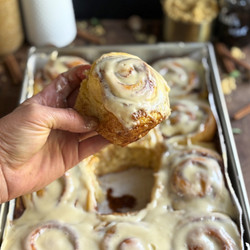
Spread the glaze generously over the rolls while they are still warm. The warmth of the rolls allows the glaze to melt slightly into the layers. Serve immediately.